

Calvisson, a Village of Traditions and History
I loved discovering this medieval village in the heart of the Gard department in an idyllic Southern French setting

Every Sunday morning, charming Calvisson transforms into a provençal market scene brimming with Mediterranean flavours. However, even on other days, this medieval village in the heart of the Gard department offers an idyllic Southern French setting. Its central location in the Vaunage plain and the Vidourle Valley between the Mediterranean Sea and the Cévennes, guarantees beautiful surroundings. And that only at a short distance from cities like Montpellier and Nîmes.
Place Général de Gaulle
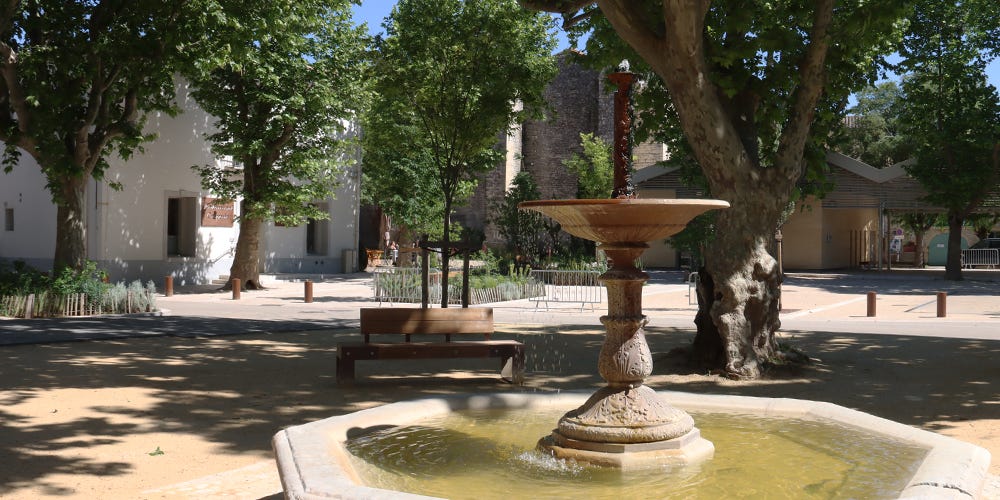
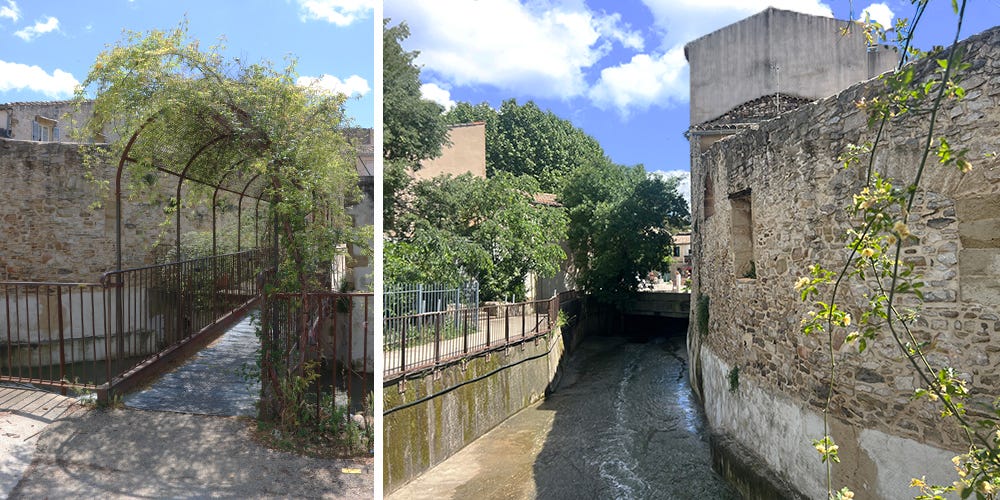
The moment I discovered Calvisson, I knew I was in a good place. From the free parking area along the Rue du 8 Mai, I walked across a footbridge spanning the Ruisseau de Calvisson, a small stream. Going under the arch covered in beautiful climbing plants made quite an entrance into the village’s centre. Upon arriving at the Place Général de Gaulle, I found some shops and restaurants catering to all tastes (La Remise and La Crêpe Savane, for example). Right in front of the embroidery museum ‘La Maison du Boutis’, I sat for a moment by the fountain. The dancing plane tree leaves provided some welcoming shade. This is also where the weekly Sunday morning market takes place, one of the largest in the Gard department.
Middle Ages
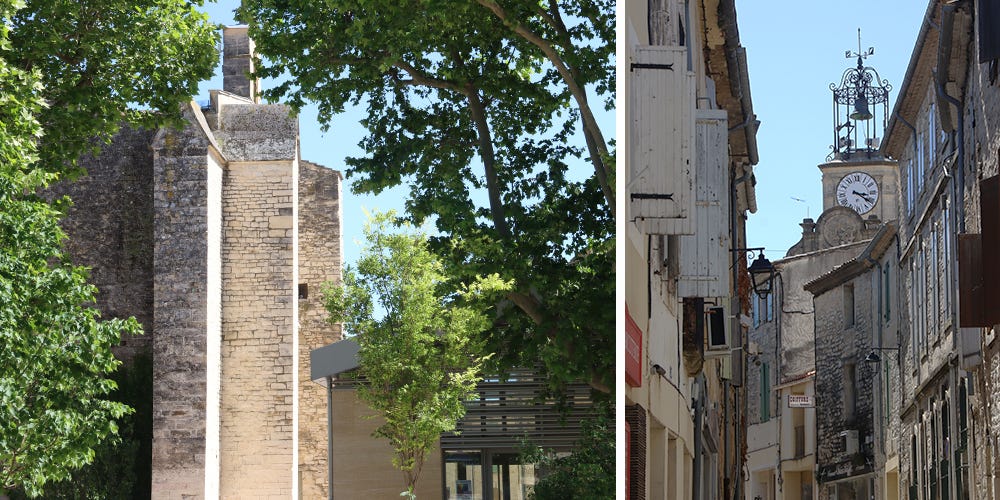
While Calvisson has traces dating back to prehistoric times, the current village has its origins in the Middle Ages. And shards of Etruscan amphorae indicate a wine-growing culture existed as early as the 7th century BC. If you’re interested in more history, I suggest doing the pleasant walk along the Voie Verte, where a ‘Mur du Temps’ (Wall of Time) recounts 27 centuries of history through nine information panels. This time, however, I continued my stroll past the Saint-Saturnin Church and the reconstructed ‘Maison de l’Information’ (a tourist and administrative information centre) toward the Grand Rue. Little by little, this charming street revealed more of the town hall’s bell tower, which features a historic bell cast in 1661. A bit further along, I admired the old covered market. It was rebuilt at the end of the 19th century in the style of French architect Victor Baltard.
Camarguan Roots
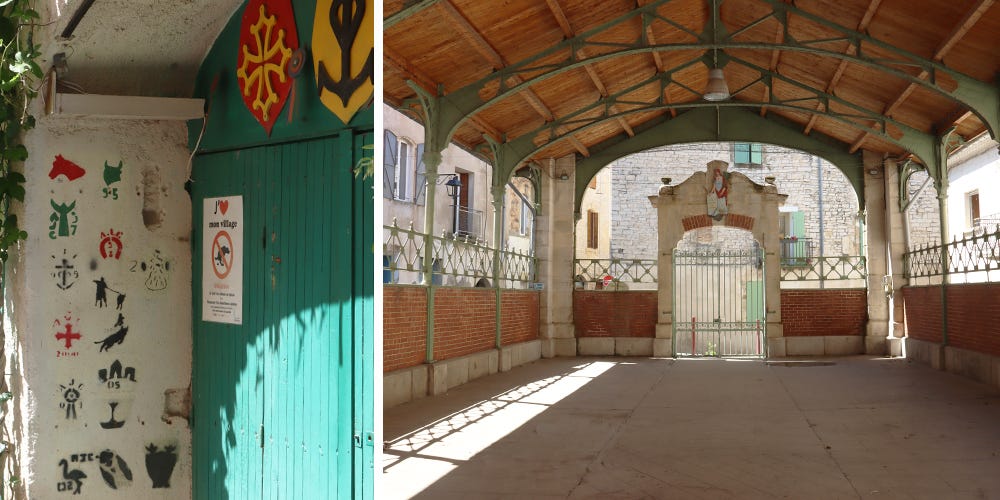
My goal was to reach the Lavoir de Florent, Calvisson’s most remarkable wash house, probably dating from the 16th century. As I walked through the village streets, I noticed many doorways adorned with images. I asked a passer-by what these meant, and he explained that they were a mark of the annual Fête Votive. Calvisson has its roots in the Camargue, and celebrates its traditions and local customs during this summer votive festival. The festivities include music and communal meals at long tables, as well as events involving bulls and horses. Fortunately, there are gentler ways to experience local traditions, though. Like hiking the ‘Chemin des Laines’ (Wool’s Way) or walking to the three windmills on the Roc de Gachone. And I put the gastronomic restaurant Monique on my wish list. Plenty of reasons to return if you ask me!
Good to Know
Calvisson is a medieval village with all amenities, located between Nîmes and Montpellier. It boasts a weekly Sunday morning market and offers several lovely shops and restaurants. Numerous hikes around the village, such as the Mur du Temps along the Voie Verte (a car-free greenway) and the Chemin des Laines trail, offer excellent opportunities to explore. You can also walk to the three windmills on the Roc de Gachone, a modest hill overlooking Calvisson.
Parking
There is a large free parking area in the centre of the village along Rue du 8 Mai. If you plan to visit on a Sunday morning, it is best to arrive early and secure a parking spot as soon as possible.
Office de Tourisme
1 Quai Cléon Griolet
30250 Sommières
+33 (0)4 66 80 99 30